|
||||||||||||
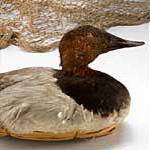 |
Van Allen, Adrian. 2024 (Accepted). "Flight Paths Through the Museum: Paiute Duck Decoys and Bird Specimens from the 1859 Utah Territory Expedition." In Putting Theory & Things Together: Working with Museum Collections, edited by Joshua A. Bell. Washington D.C.: Smithsonian Institution Scholarly Press.
|
|||||||||||



 |
Download PDF (Preprint) |
Abstract
Objects tell stories–through their social lives, their materials, their paths of exchange, and the different meanings they acquire as they shift between contexts. In this paper I examine the circulation paths of several Smithsonian ducks, each crafted into a carrier for different knowledge using the same materials: bird parts combined with grass, cotton and wire. My collection of ducks include Paiute duck decoys and scientific study skins from the 1853 Utah Territory Expedition, a set of duck skins stretched over reed forms or stuffed with cotton. Shipped back to the Smithsonian these various assemblages of reconfigured duck parts were catalogued into “natural” and “cultural” artifacts and circulated into the Ethnology and Ornithology collections. To understand these historical ducks in their contemporary context I learned to prepare my own duck study skin in the Smithsonian Division of Birds. Taking tissue samples from my black-bellied whistling duck I followed the assemblage and circulation of its genomic data through the museum and beyond. The circulations of bird parts—from the field into the museum, to the lab and then out into public databases—charts not a linear path but a set of circular routes, back and forth through time, where the same materials can carry different meanings.

Van Allen, Adrian. 2024. “La vie en suspens: Risque et potentiel dans les collections génétiques du Muséum national d’histoire naturelle”(Suspended Life: Risk and Potential in the Genetic Collections of the Muséum national d’histoire naturelle) in Les réserves des musées (Museum Collections), edited by Tiziana Beltrame and Yaël Kreplak. Paris: Presses du Réel, pp: 287-302.
|
Download PDF (English translation) |
Abstract
Emerging technologies, especially genomics, are revolutionizing access to museum specimen collections and reshaping our understanding of their significance. Once considered mere repositories of life—dusty drawers filled with specimens that only taxonomists and museum professionals cared about—natural history collections are now being reimagined as rich reservoirs of biological information. This chapter delves into the practices of genetically sampling collections, focusing on how biotechnology is integrated into the ever-expanding collections at the Muséum national d'histoire naturelle in Paris (MNHN). This transformation raises complex ethical and practical dilemmas. Scientists must navigate the delicate balance between the potential benefits of genetic research and the risks of compromising irreplaceable specimens. The case of the Seychelles magpie-robin exemplifies this challenge, as curators evaluate requests for tissue samples, weighing the scientific contributions against the need to preserve specimens for future research. By examining the daily practices of museum scientists as they create and sample specimens, we can illuminate the underlying values guiding their work. Museum collections are not static assemblages of physical specimens; they encompass the practices, technologies, and individuals involved in their creation and use. These collections embody evolving concepts of time, value, and potential, shaped by scientific advancements and societal concerns about biodiversity loss. Ultimately, they represent a complex interplay between the past, present, and future of life on Earth, underscoring the museum’s vital role in the ongoing dialogue about conservation and biodiversity. This dynamic perspective invites us to reevaluate how we view and utilize museum collections in an ever-changing world.
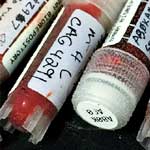
Van Allen, Adrian. 2024. “Feral Biobanks: Craft, Care, and Salvaged Ecologies using Frozen Collections” Gradhiva, Special Issue: Living Collections, edited by Mélanie Roustan, Mathilde Gallay-Keller, Manuel Valentin, Dominique Juhé-Beaulaton, and Serge Reubi. 36: 108-125 (2024).
DOI: https://doi.org/10.4000/gradhiva.7458
|
Download PDF |
Abstract
One way of understanding the power of objects is to tease apart the relationships between their constituent parts and engage with the moments of their transformations. This photo essay follows the ways living animals are transformed into museum objects in multiple forms–from stuffed skins and bones in cabinets, to frozen tissue samples in biobanks, and finally into genetic data. I focus the current project to revive the critically endangered black-footed ferret (Mustela nigripes) using collections of eggs, sperm and tissues cryo-preserved in museums and zoos over three decades. Through this, I explore the question of how “epistemic things” (Rheinberger 1997) are made and remade in the museum—through the materials and practices of making, preserving, using, and maintaining objects, such as frozen collections of endangered animals. That is, how can we understand the cryopolitics (Radin et Kowal 2017) of these practices, and the ways knowledge is created with and through these collections—particularly those on the edge of life such as biobanked collections of tissues, eggs, and sperm? In doing so I look to the kinds of power, craft, and care involved in these practices.

Van Allen, Adrian. 2022. "Entangled Timelines: Crafting Types of Time Through Making Museum Specimens."Centaurus: European Journal of the History of Science, Special Issue Collections, Knowledge and Time, edited by Karin Tyjberg and Martin Grünfeld.
DOI: https://doi.org/10.1484/j.cnt.5.135353
|
Download PDF |
Abstract
Building on previous work where I examined the materials and practices used by museum scientists to craft specimens and construct futures, I suggest different temporalities are “folded” into the daily practices of preserving specimens (Van Allen, 2020). In this paper I extend this concept of “folded time” to explore the idea of entangled timelines—exploring the means and methods for constructing personal, institutional, and species-level narratives of memory through crafting museum specimens. Based on ethnographic research at the Smithsonian National Museum of Natural History in Washington D.C. and the California Academy of Sciences in San Francisco, I follow butterflies and moths (Lepidoptera) as they are collected, euthanized, pinned, genetically sampled, and frozen in biobanks for imagined future uses. In doing so, I suggest that as specimens are taken apart and reassembled in museums, they are constructed to articulate different concepts of time with different pieces. Reconfigured into specific representations of types of time they embody complex disciplinary histories of collecting insects entangled with personal histories, where a sense of self is created in and through the specimen preparation process. New perceptions of preservation, temporality, loss and care come into play as specimens are prepared, sampled and reimagined as solutions for recreating lost ecologies.
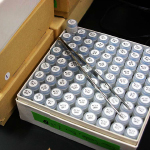
Van Allen, Adrian. 2022. "Capturing Genomes: The Friction and Flow of Bioinformation at the Smithsonian." In Bioinformation: Worlds and Futures, edited by Silvia Posocco and EJ Gonzalez-Polledo. London: Routledge Anthropology Press, pp. 36-53.
DOI: https://doi.org/10.4324/9780367810030-3
|
Download PDF |
Abstract
Museum genomics is merely the most recent iteration of viewing the natural world as a data set to be collected and analyzed. Framing natural science collections as databanks reconfigures the collections as valuable to expanded audiences, transforming them into resources—and potential solutions—for contemporary crises both social and biological. This chapter examines the negotiation and creation for a data standard for “genome-quality” frozen tissue collections at the Smithsonian National Museum of Natural History in Washington, D.C. – a practice the museum scientists termed “capturing genomes.” My ethnographic study of biodiversity biobanking in the museum focus on the material practices of making and remaking life in an era of increasing biotechnical capacity as well as increasing biodiversity loss. Standards make data accessible, but they also draw invisible lines between what is kept and what is discarded, naturalizing the remaining data, practices, specimens, and interests and obscuring the labor required to make and maintain them. That is, biobanking practices orient museum sociologies, biologies and ecologies—engaging them in ongoing processes of re-inscribing and removing the boundaries of nature and culture. In turn, these nature-culture assemblages have the potential to expand the multiple possibilities for thinking about interspecies relationships as we move into uncertain futures.

Van Allen, Adrian. 2020. "Folding Time: Practices of Preservation, Temporality and Care in Making Bird Specimens." In Deterritorializing the Future: Heritage in, of and after the Anthropocene, edited by Colin Sterling and Rodney Harrison. Critical Climate Change series. London: Open Humanities Press. pp. 129-154. Book PDF: open-humanities-press
|
Download PDF |
Abstract
Through crafting specimens and corresponding categories of life, natural history museums have been apparatuses for articulating knowledges, power, and natures into an ordered whole, practices that have extended through to contemporary natural history museums and their genetic collecting programs. In this paper I focus on the practices of “folding time” in specimen preparation practices of two museums—the Smithsonian Institution National Museum of Natural History (NMNH) in Washington D.C. and the Muséum National d’Historie Naturelle (MNHN) in Paris. Examining the ways that animal bodies are made and remade at these two sites I explore how they are configured into specific representations of types of time—as windows into ecological pasts, markers of deep evolutionary time, or as instruments for future biodiversity conservation policies. Within the context of these longer histories of specimen preparation, I argue that as birds are taken apart and reassembled in the museum they articulate different concepts of time with different pieces. Following scientists and their specimens into the workrooms, laboratories and biorepository of these museums, I learned to stuff bird skins, take tissue samples, extract DNA, and assemble genomic data. In examining two sets of materials and tools used by scientist to craft specimens and construct futures, I suggest different temporalities are “folded” into the daily practices of preserving specimens. Historic techniques are transformed with the integration of new technologies, and in doing so incorporate new perceptions of preservation, temporality and care—all oriented towards charting the genomic biodiversity of life and preserving it for uncertain futures.
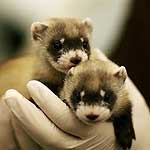
Van Allen, Adrian. 2019. “Resurrecting Ferrets and Remaking Ecosystems.” Anthropology News 60 (3): 20-23. Special Issue Animalia, edited by Natalie Konopinski.
DOI: https://doi.org/10.1111/an.1163
|
Download PDF |
Abstract
Cryopreservation has given way to a new scientific ice age: The ability to freeze and bank biological material is today a pivotal technological practice in animal breeding, conservation biology, and human reproduction. This article examines the revival of the black footed ferret (Mustela nigripes) using eggs, sperm and embryos cryo-preserved in museums and zoos over three decades. Thought extinct until a remnant population of 18 individuals was discovered in 1981, these “salvaged” ferrets were captured and used in breeding programs, increasing their genetic pool with in-vitro fertilization using frozen collections. Based on ethnographic fieldwork in the laboratories and biobank at the Smithsonian Conservation Biology Institute at the National Zoological Park in Washington D.C., I examine the practices of reviving endangered species through biotechnology. Working with scientists as they created, used and negotiated the potential of frozen collections I examine these biobanked resources of ferret genetic material from two connected perspectives. First, I explore the concepts of violence and care as frozen collections are utilized not just for their potential to resurrect a critically endangered species, but with the potential of their “latent life” used to reconstruct specific pasts and craft imagined future ecologies. Care here can be understood as care for a reconstituted species and their ecosystems as well as care of the self through the “cryo-optimistic” practices of remaking ferrets. Second, I focus on the cryopoltics of technology as it migrates from human medical contexts into the feral landscape of biodiversity conservation, a “feral” biobank so named for the potential authentic wildness it may both contain and reproduce.

Van Allen, Adrian. 2019. "Oiseaux, plumes, spécimens, données: l'évolution de la valeur des collections de musées dans l'anthropocène (Birds, Feathers, Specimens, Data: The Changing Value of Museum Collections in the Anthropocene)." In Valeurs et Matérialité: Approches Anthropologiques (Value and Materiality: Anthropological Approches), edited by Frédéric Keck. Editions Rue d'Ulm et musée du quai Branly. Paris: l’Ecole normale supérieure Press.
DOI: https://doi.org/10.4000/books.editionsulm.2617
|
Download PDF (in French) |
Abstract
Through their creation, circulation, perceived value, and the connections they embody between people, places, materials, and interests objects contain multiple, layered narratives. Amazonian featherwork objects tell a very specific narrative, as traced through their creation and display as exotic objects to sites of cultural heritage. Following a parallel line of inquiry, bird specimens were collected in the same region during the same period, transformed from exotic objects to scientific specimens, and are now being re-evaluated as sites for mining genetic data for biodiversity conservation. Connecting museum collections across disciplines—such as ethnographic featherwork and scientific bird specimens—highlights their location within larger networks of practice, exchange, and value. Tracing the material, semiotic, historical, and technological connections between a group of Amazonian featherwork objects (Museé du Quai Branly) and bird specimens (Muséum National d'Histoire Naturelle), my research examines the shifting value of museum collections, focused on the material practices that create different kinds of value. Through studying how featherwork and bird specimens are made and remade as valuable objects through time—most recently as genetic samples and genomic data—I link the historical, archival, and contemporary uses of the collections, and in parallel, engage subjects in ethnographic interviews at both museums. A close attention to the material practices of creating and conserving these objects, and the types of perceived value generated through these processes, form my methodological and theoretical framework. Collections are not simply accumulated objects, but instead can be seen as a continual reassemblage of the people who have made, use, and collect the objects, and the regimes of value they represent and reproduce. My research engages the construction of these assemblages, creating meaningful paths through and between collections, disciplines, and perspectives. Through examining featherwork and bird specimens as assemblages of materials and shifting values, in their historical and contemporary contexts, this project proposes a case study of these objects to provide an extensible model for interdisciplinary collections research.

Van Allen, Adrian. 2018. "Pinning Beetles, Biobanking Futures: Genetic Voucher Specimens and Shifting Ontologies in Museum Genomics.” New Society and Genetics, 37 (04): 387–410.
DOI: https://doi.org/10.1080/14636778.2018.1546573
|
Download PDF |
Abstract
Examining how biotechnology is redefining concepts of “life itself,” I explore the museum as a site for thinking through how life is being archived and for what imagined futures. Focusing on negotiations at the Smithsonian National Museum of Natural History between 2014-2016, this article examines debates over whether a genetic sample could serve as a voucher specimen—a physical reference permanently preserved in a museum. Learning to pin beetles, take genetic samples and extract DNA I reconstruct the analytical chains that bind together a specimen, samples and data. I argue that the capacities and limitations of biomaterials are a vital part of understanding how cryo-collections are made to matter as ontological embodiments—through their negotiated use and continuing re-evaluation.

Van Allen, Adrian. 2017. “Bird Skin to Biorepository: Making Materials Matter in the Afterlives of Natural History Collections.” Knowledge Organization, 44(7) 2017: 529-534.
DOI: https://doi.org/10.5771/0943-7444-2017-7-529
|
Download PDF |
Abstract
Examining the material practices of museum genomics, my ethnographic research focuses on the Global Genome Initiative at the Smithsonian National Museum of Natural History in Washington D.C., a project that seeks to preserve vanishing biodiversity for an uncertain future by sampling and cryo-preserving half of the families of life in the next six years . Through stuffing a bird skin, taking genetic samples, and sub-sampling tissues for DNA extraction I examine a return to encyclopedic collecting with biotechnological tools, exploring how biotechnology is redefining and preserving “life itself” (Foucault 1966; Kowal and Radin 2015). This article examines one instance of how museum collections are made, standardized, and shared at the Smithsonian. Contrasting perspectives from ethnographic work in the Division of Birds and the Biorepository, I examine the friction and flow of biodiversity as specimens are transformed into data through material-semiotic practices. I analyze how these data and specimens then undergo multiple re-classifications as categories for new types of museum objects—such as genetic samples—are negotiated. Cryo-collections are “made to matter”(Barad 2003) as ontological embodiments through their preservation, multiple uses, and standardization across disciplines. Through attending to the (bio)materials themselves, the practices currently structuring a shared ecological future become legible.
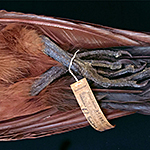
Van Allen, Adrian. 2016. “Crafting Nature: An Ethnography of Natural History Collecting in an Age of Genomics.” Ph.D. dissertation, Department of Anthropology, University of California Berkeley.
ProQuest ID: VanAllen_berkeley_0028E_16289
See book project below: Frozen Futures: Crafting Natural History in a Genomic Age
Abstract
As biotechnology reshapes museum practices, vanishing biodiversity is being preserved for uncertain ecological futures in a variety of ways, each with a distinct shape and scale of time guiding its making. This ethnography focuses on the Global Genome Initiative at the Smithsonian National Museum of Natural History in Washington D.C., a project that seeks to cryo-preserve half of the taxonomic families of life in the next six years. Grounded in a feminist STS perspective of how materials are made to matter (Barad 2003) I examine how museum cryo-collections are crafted as ontological embodiments (Mol 2003) and forms of "latent life" (Radin 2013; Radin and Kowal 2017) as they are made and used. Through stuffing bird skins, pinning beetles, pressing plants, taking tissue samples and assembling genomic data I explore how these disembodied living things are transformed into embodiments of different types of time—through their preservation, negotiated use and continuing re-evaluation as specimens are made, evaluated and consumed. As specimens’ biologies are unbound (Helmreich 2009) into differently valued parts and pieces, spread across the spaces of the museum—from frozen tissue samples to a bird skins in cabinets to globally dispersed data—these distributed specimens remain sites of contested classificatory meanings, objects of shifting value, and disembodiments of hand-crafted “natural orders” (Foucault 1966; Haraway 1989). Through exploring museum specimens as mobile and transformative of a variety of scales of time, I argue there is multiplicity not only between but also within objects as they negotiate reconstructed pasts and imagined futures.

Van Allen, Adrian. 2014. “Object Lessons: Visual Anthropology in the Museum” Review of Museums: A Visual Anthropology by Mary Bouquet. Museum Anthropology Review, 8 (1) 2014: 86-88.
DOI: http://dx.doi.org/10.14434/mar.v8i1.12940
|
Download PDF |
Abstract
The history of anthropology is bound up with collecting. From the material cultures collected for research and display in the beginnings of the discipline in the 19th century, to the contemporary moment where different voices contest the ownership and meaning of such objects—museum collecting is at the center of the discussion. Mary Bouquet’s clearand comprehensive Museums: A Visual Anthropologymoves the reader carefully through an array of issues at theintersection of museum studies, material culture studies, and anthropology. Subjects include collecting practices, display strategies, repatriation, the integration of digital technologies, and ethnography as both an object (museums of ethnography),and as a subject (ethnographies of museums). The book deals at itscore with globalization and the reproduction of knowledge—how museums shape collective identities and negotiate power relations through collection, exhibition,and repatriation strategies.
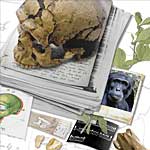
Hsi, Sherry, Joyce Ma, Adrian Van Allen, Kristin Sikes, and Melissa Alexander. 2007. "From “Guerrilla” Methods to Structured Evaluations: Examples of Formative Web Design from the Exploratorium’s Evidence and Mind Projects." In Museums and the Web Vol. 2007. PDF: museum-and-web2007
|
Download PDF |
Abstract
This paper presents formative Web testing and evaluation methods created at the Exploratorium, ranging from floor testing with museum visitors using low-cost “guerilla” methods to structured evaluations that engage museum visitors and on-line remote audiences in the design process. This paper illustrates these methods using examples from two U.S. National Science Foundation-funded informal science education projects. The first project, “Evidence: How Do We Know What We Know?,” addresses how to improve the public’s understanding of a key element of the scientific process: how scientists attempt to construct a functional understanding of the world by gathering evidence, and how they make discoveries based on evidence. The second project, “Mind: Attention, Emotion, and Judgment–How do minds figure out what to do?,” addresses developing a companion web site to a new exhibition and educational programs that support museum visitors’ exploration and experimentation with their own minds. In both of these projects, close collaboration between web developers and evaluators enabled the collection of useful feedback. Different configurations of interactive media, the Internet, the museum floor, and visitors were used in concert to disentangle open-design questions and to generate constructive feedback and Web design revisions. This partnership approach and these evaluation methods offer developers new alternatives to standard usability testing approaches for improving Web site designs in the early development stages of complex projects.


Van Allen, Adrian. 2020-2022
"Remaking Museums in a Time of Extinction: Amazonian Birds and Featherwork as Cultural and Ecological Heritage" Smithsonian Institution, National Museum of Natural History, Dept. of Anthropology, Postdoctoral Fellowship
Project Overview
Tracing the material, semiotic, historical, and technological connections between a group of Kayapo featherwork headresses (Smithsonian NMNH, Department of Anthropology) and bird specimens from two scientific collecting expeditions (Smithsonian NMNH, Division of Birds), my research questions examine the shifting value of museum collections, focused on the material practices that create different kinds of value. I examine how museum collections are being evaluated as untapped resources, recast as sites for preserved cultural heritage and biodiversity conservation. Through examining featherwork and bird specimens as assemblages of materials and shifting values in their historical and contemporary contexts, this project will produce a case study of these specimens/artifacts and provide an extensible model for interdisciplinary collections research.
Connecting museum collections across disciplines—such as ethnographic featherwork and scientific bird specimens—highlights their location within larger networks of practice, exchange, and value. Focusing on three groups of Amazonian parrot skins and feathers, my research will chart the transformation of birds into religious artifacts, art objects, and scientific tools. Examining the creation, collection, and circulation of Amazonian featherwork objects and bird specimens collected by the Smithsonian in 1931, 1986, and 2000, I ask what kinds of relationships are constructed through the bodies of these birds as epistemic objects, with the bird bodies multiply transformed into different tools, each shaped as solutions to different disciplinary problems. Further, what kinds of capacities or limitations do museum collections represent when re-conceived as an untapped wealth of “data”? How do museums perceive themselves, and their ethical responsibilities, within these emerging frameworks of conservation, care, and salvation in the face of cultural heritage claims and mass biodiversity loss? To ground these questions with a detailed attention to material practices, I attend to what is being saved, how is it being preserved, and for what kinds of imagined futures. I argue each of these objects unfolds as part of an interconnected narrative about human-environment interactions through time, with each material form (skin, feathers, tissue samples) participating in the reproduction of practices and restructuring of knowledge. These interactions extend through reconstructed pasts and into predicted futures, with the material properties of objects as a key element of these on-going negotiations.

Van Allen, Adrian. 2019-2021
"Biobanking for the Future in Japan, France, and the USA: A Comparative Study of Preserving Biodiversity in an Age of Extinction" Social Science Research Council (SSRC), Abe Fellowship
Project Overview
As extinction rates increase, with an estimated 50% of all species potentially heading towards extinction by mid-century (IUCN Red List 2017), the ethical imperative to preserve biodiversity before it vanishes has taken on multiple forms. Conservation projects have emerged in the recent decades that focus on preserving vanishing biodiversity through genomic collecting for an uncertain future (Hanner et al. 2009; Harrison 2017). This research project examines the collection and exchange of specimens, tissues samples and genomic data at three national museum of natural history in the USA, France and Japan: The Smithsonian National Museum of Natural History (Washington D.C.), The Muséum Nationale d’ Histoire Naturelle (Paris) and the National Museum of Nature and Science (Tokyo). Members in a global coalition of museums, zoos, herbariums these sites are working towards biobanking genome-quality samples of all life—collaborating to create an archive of “all life on ice.” Museum genomics projects negotiate between international bioprospecting policies, priorities for biodiversity monitoring and assessing the impact of species loss on human biomedical, agricultural and security concerns. Key questions to consider at this pivotal moment are: How do emerging genomics practices affect the preservation of vanishing species and their movement across international borders? What are the implications of museum genomics for individuals, institutions and nations as they negotiate access, conservation and benefit sharing from genomic collecting? How do scientists engage with each other across disciplines, and also across borders, to negotiate the global circulation of specimens? And how are these various practices shaped by policies such as the Convention on Biological Diversity (CBD), the Nagoya Protocol, and the Convention on International Trade in Endangered Species (CITES)?
The goal of this research is to provide a detailed view of genomic collecting workflows in and across museums, and to improve knowledge about the capacities and limitations of museum genomics and its interactions with international policies to make them legible to policy makers and wider public audiences. To this end I will be conducting ethnographic fieldwork in three national natural history museums in Washington D.C., Paris and Tokyo. At these sites I will be interviewing administrators, curators, geneticists, lab technicians and policy-makers, and as a participant-observer in the laboratories and workrooms of the museums I will continue my hands-on methodology of learning to prepare specimens, extract DNA and assemble genomic data. The collected data will result in two peer-reviewed papers: one on the theoretical and ethical concerns of museum genomics and global biobanking, and a policy review providing insight into the movement and global exchange of specimens and genomic collecting workflows for policy-makers and wider public audiences.

Van Allen, Adrian (manuscript under revision)
Frozen Futures: Crafting Natural History in a Genomic Age
Abstract
How are types of time made, futures formed and life preserved? As biotechnology reshapes museum practices, vanishing biodiversity is preserved for our collective and uncertain ecological futures in a variety of ways, each with a distinct shape and scale of time guiding its making. This ethnography focuses on the Global Genome Initiative at the Smithsonian National Museum of Natural History in Washington D.C., a project that seeks to cryo-preserve half of the taxonomic families of life in the next six years. Through stuffing bird skins, pinning beetles, pressing plants, taking tissue samples and assembling genomic data, I examine how cryo-collections are crafted as ontological embodiments, forms of "latent life" (Radin 2013), and embodiments of different types of time—through their preservation, negotiated use and continuing re-evaluation. As specimens’ biologies are unbound (Helmreich 2009) into differently valued parts and pieces, spread across the spaces of the museum—from frozen tissue samples to a bird skins in cabinets to globally dispersed data—these distributed specimens remain sites of contested classificatory meanings, objects of shifting value, and disembodiments of hand-crafted “natural orders” (Daston 2004; Foucault 1966). Through exploring museum specimens as mobile and transformative of a variety of scales of time, I reiterate that there is multiplicity not only between but also within objects as they negotiate reconstructed pasts and imagined futures.

Van Allen, Adrian and Joshua A. Bell, eds. (edited volume in progress)
Birds as Material Culture: Engagements Between Zoologists and Anthropologists
Abstract
Bringing together various lines of disciplinary flight, this book examines the ways in which biological entities–birds–are collected, crafted, circulated and curated within museums. The value of birds have shifted across time and between contexts: from the Smithsonian Institution’s National Museum of Natural History’s treasured taxidermy mount ‘Martha’ the last passenger pigeon (Ectopistes migratorius); to the hollowed-out quills of the California Condor (Gymnogyps californianus) used to carry gold dust during the Gold Rush; to the red and black feathers of the Scarlet honeyeater (Myzomela Cardinalis) woven into ‘feather money’ and used for exchanges in the Solomon Islands. Birds are valuable as metaphor, as material, and as a way to understand the entangled social, cultural and biological knowledges of a museum and its collections. Drawing on insights from the multispecies turn with interdisciplinary approaches to the examination of material culture, the chapters examine these entanglements along different scales, from molecular to morphological to metaphorical. Doing so they collectively discuss the real and figurative wealth found in birds, and raise questions about how anthropology and the biological sciences construct knowledge in their manufacture of specimens. Integrating insights from anthropologists, archeologists and ornithologists, the book's chapters examine how different ontologies are alternatively made present or obscured during the transformations of birds into artifacts, specimens, and data, and why collections continue to matter in an age increasingly defined by ecological collapse and uncertainty. Different authors examine the art and science of preparing bird study skins and taking tissue samples for an archive of life, specimen collecting through social networks in the Arctic, the assembly of a honeycreeper genome, isotopic analysis of feather and bone from historic specimens, the cultural history of the kula feathers in Central Oceania and the social values of extinct giant elephant birds of Madagascar for communities in the past. For as much as we carry birds from field to lab to collection, they also carry us—burdened with metaphor, valuable as material, or even transformed into a featherwork cape, a genome or an ancestral figure—they speak to the generative potential of museum collections.

Van Allen, Adrian. “Resources for Repair: Feathers, Specimens, Heritage and the Reimagined Potential of Museum Collections.”
Abstract
Museum collections are currently being re-evaluated not just for what they are, but for what other kinds of knowledge they can be seen to potentially offer up, that is, what they can do. Within the context of the museum as an “archive” of postcolonial pasts and reimagined futures, I examine the material practices that construct, preserve and maintain two objects made from birds. My ethnographic research focuses on two episodes of identifying and collecting feathers in the behind-the-scenes spaces of two Parisian museums. First, I accompany visiting researchers into the conservation lab at the Musée du quai Branly to view a 16th c. Tupinambán club originally adorned with bundles of parrot feathers, now a resource for indigenous groups working to revive lost cultural heritage. Second, I move to the specimen collections at the Muséum National d’Histoire Naturelle where I work with scientists to assess the viability of stuffed parrot skins for extracting samples from feathers, bones or toepads to measure environmental contaminants. Following these two threads I examine how Amazonian featherwork objects and bird specimens are being reimagined as tools for “repair” in multiple senses, on the one hand used to revive lost heritage craft practices and on the other to reform ecological damage.
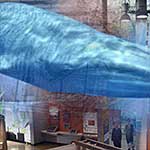
Van Allen, Adrian and Hannah Turner. "From Stereograph Cards to Augmented Reality: Misaligned Bodies and Virtual Whales in the Museum"
Abstract
We examine the histories of augmented media in museums by locating the origins of augmented media at the turn of the 20th century with the use of stereoscopic image viewers for museum publics. This historic perspective is constrasted with ethnographic accounts of developing an augmented reality exhibit in a contemporary natural history museum, the California Academy of Science. Widely used media technologies at the time, stereoscopic images and viewers allowed for individuals to take home and experience the outside world – from the streets of Rome to the exhibits installed at the Chicago Field Museum. Contemporary scholarship in media studies and film studies has situated the stereoscope within the history of virtual or haptic visual environments; yet the use of stereoscopes to engage museum visitors is little understood. By looking at the history of the stereoscope and plotting the proliferation of museum objects on display in stereoscopic images from research completed in institutions such as the Pitt Rivers museum, The Chicago Field Museum, and the Smithsonian’s National Museum of Natural History, this paper both contextualizes the augmented museum – and the augmented museum specimen – in the long history of museum visualization, objectivity and the construction of specific sensibilities and (mis)aligned bodies via technological apparatuses. It argues that particular epistemic loyalties and values were not only embedded into institutions by their displayed objects and dioramas, but also by the use of the stereoscope as an early augmented media technology for education and outreach.

Van Allen, Adrian. "Reassembling the Wild: Mining the Museum for an Authentic Bison Genome"
Abstract
Determined to save representative specimens of the American bison for posterity before they dwindled to extinction, the Smithsonian sent several collecting expeditions to Montana between 1885-1886. This early Smithsonian bison collection has since circulated through the museum and beyond: From a renowned diorama in the original United States National Museum's (USNM) Hall of Mammals, to a mounted skeleton recently re-skinned with an augmented reality app, to the genetic sampling of the research collection of skins, skulls and alcohol-preserved fetuses in 2013—new audiences have transformed the collection with new technologies. These genetic samples from the Smithsonian’s 19th century bison collection are now being used to reassemble an ‘authentic’ bison genome, one free from cattle DNA introduced by crossbreeding in the 1890s. Part of a new joint effort between the National Park Service and Texas A&M University to conserve the bison’s genetic distinctiveness, the reassembled genome will potentially be used to sort the federally controlled bison herds in Yellowstone National Park into either ‘wildlife’ or ‘livestock’—with each category governed by different policies, subject to different uses, and each reflecting underlying concepts about the inherent value of natural resources. In an examination of how the bison collections were originally made and are currently being mined I look to the entangled histories of national identity and national collecting, examining conflicting concepts of conservation, the reconstruction of wilderness, and the implications of reassembling a historically ‘authentic’ genome.
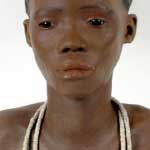
Van Allen, Adrian. "Object Lessons: Dioramas, Genomes, and Shifting Concepts of Authenticity at the Smithsonian"
Abstract
In 1967, the newly renovated Hall of African Cultures opened at the Smithsonian National Museum of Natural History. From importing beetle larvae for poisonous arrows to obtaining authentic mannequins the African Ethnology curator Gordon Gibson created a detailed replica of Khoisan life in Exhibit #34, the Bushman Diorama. However Gordon's carefully crafted diorama is a specific formation of the authentic, one which both models and maintains an a-historical construction of the Khoisan as a hunter-gatherer society offering visitors a view into a collective human past—not into a culture in another place but in another time. Through tracing the diorama's mannequin casts back to the South Africa Museum in Cape Town—and tracing the hairs still embedded in the molds–I examine contemporary framings of the Khoisan people as one of the most genetically diverse human populations on the planet. Through this framework of presence and absence, original and replica, model and archetype, I follow the series of face casts through their circulation in museums and examine genetics as another claim to authenticity in the context of the Smithsonian’s 2014 'Genome' exhibit. Museum collections are a shifting composition of the people who have made, use, and collect the objects, and the cultural imaginaries they represent and reproduce. In the context of genetic collections, specific ethical choices are being made and ‘natural’ truths remade according to shifting ideals of value and use.

Van Allen, Adrian. "How To Build A Whale: Articulating Practices Through Assembling a Skeleton"
Contextualized within a long history of crafting articulated skeltons for natural history museums, I explore whale-building as both a process and an object that gathers together communities of practice around the vibrant matter (Bennett 2009) of the skelton as it is transformed from broken pieces to a legible, articulated whole. During the summer of 2017 I worked with a group of scientists, volunteers and "master articulators" to assemble a set of skeletons including a 27-foot orca, a common dolphin and several sea lions in Fort Bragg, California. In this paper I examine the practices of articulating different types of knowledge as we articulated bones—cleaning, drilling, and assembling pieces to re-aggregate bits of biological material into epistemic objects (Knorr-Cetina 2001). Through discussing the details of drilling vertebrae, bending and bolting steel pipe to thread through bones, and 3D priinting teeth and missing parts, I argue that epistemic objects—such as skeltons—are in a continual process of being defined as they articulate between past knowledge sturctures and new ones (Fortun and Bernstein 1998), continually acquiring new properties.


Cargo
A series of porcelain casts made from 3D scanned natural history specimens, my project collapses two types of cargo circulated in the 17th-18th century by the Dutch East India Company—export ceramics and natural history specimens—to examine the value of exotic nature and its commodification.
View project page >

Making Natural History: Behind the Scenes at the Smithsonian
(photo book)
Objects tell stories – through their social lives, their materials, their paths of exchange, and the different meanings they acquire as they shift between contexts. This books traces the path specimens take within the museum, following their transformation from living things into museum specimens into data. Chapters examine the detailed processes of making scientific specimens of birds, mammals, parasites, botanical pages, frozen genetic samples, alcohol-preserved fish and lizards, pinned butterflies and moths, beetles, dinosaur fossils and polished gems and minerals slices. Each preparation process is accompanied by essays and interviews with curators, collection managers and specimen preparators.

Zoologia
A photo series shot in the natural history museums and archives of Rome, Bologna, and Florence over a six-month period. In particular, I was interested in contrasting the collections on display (mostly threadbare and some dating from the 19th century) with the private spaces of the museums, where discarded specimens were stacked helter-skelter, and empty display cases held impressions of missing inhabitants.
View project page >
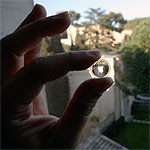
Objectivity
A reconstruction of Galileo's first telescope, set up in the same location in 2011 where the original was presented on April 14th, 1611 - 400 years later to the day. Looking through the telescope we can optically see what Galileo and his followers at the Academia dei Lincei saw in 1611, however our view of the universe has fundamentally changed. Conceptually we now percieve our universe from a deeply embedded heliocentric perspective.
View project page >
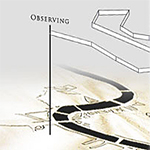
Mapping Science : ROME
A multimedia project which combines art, design, and an anthropology of science. Three pathways move through the layers of scientific history in Rome: ‘Observing’ connects a panopticon prison with early microscope slides, and recasts St.Peter’s Square as an astronomical instrument; ‘Collecting’ explores the many exotic and mundane collections in Rome including a recreation of an alchemists lab in a medical museum and the worm-tunneled bibles in the Institute for Book Pathology; ‘Comparing’ turns to the scientific process of weighing collected evidence, looking at Fermi’s radiation shields and a 17th century cabinet of curiosity.
View project page >
Adrian Van Allen, Ph.D. | curriculum vitae
|
Download PDF |
SUMMARY OF QUALIFICATIONS
Research specializations include: History and theory of museums and collections across natural-cultural domains • Decolonializing museums • Multispecies ethnographies and Feminist Science and Technology Studies • Museums as ethnographic field sites • Material culture and biographies of objects • Anthropologies of craft and technique • The impact of emerging technologies on objects, museums, and communities, including digital imaging (digitization, 3D modeling, digital repatriation) and biotechnology (genetic sampling, biobanking, rewilding)
EDUCATION
2016 University of California, Berkeley, Ph.D. Sociocultural Anthropology
Dissertation: Crafting Nature: An Ethnography of Natural History Collecting in a Genomic Age
2000 California College of Art, M.F.A. Film & Interactive Media
1999 California College of Art, M.F.A. Photography
1997 Sarah Lawrence College, B.A. Museum Studies & Photography
CURRENT INSTITUTIONAL AFFILIATIONS
Smithsonian National Museum of Natural History, Dept. of Anthropology, Research Associate
California Academy of Sciences, Dept. of Anthropology, Research Associate
EMPLOYMENT AND RESEARCH APPOINTMENTS
2016-current California Academy of Sciences, Senior Exhibit Content Developer
2017-current California Academy of Sciences, Associate Researcher, Dept. of Anthropology
2017-current Smithsonian National Museum of Natural History, Associate Researcher, Dept. of Anthropology
2019–2022 Social Science Research Council, Abe Fellowship Research Grant
2019–2022 Smithsonian National Museum of Natural History, Postdoctoral Fellowship
2019 University of California, Berkeley, Center for Science, Technology, Medicine and Society (CSTMS), Instructor for graduate seminar, “Animal/Objects: Biographies, Itineraries, Afterlives,” Spring semester 2019
2017–2018 Musée du quai Branly-Jacques Chirac, Postdoctoral Fellowship
2017 University of California, Berkeley, Phoebe A. Hearst Museum of Anthropology, Instructor for graduate and undergraduate workshops, “Drawing as Seeing: Object Explorations in the Hearst Museum Collections,” April 12-13, 2017
2015–2016 Wenner-Gren Foundation, Dissertation Fieldwork Grant
2015 Council for Museum Anthropology, Research Grant
2013-2015 Cleveland Museum of Art, Researcher and Exhibit Content Developer
2014–2015 Smithsonian National Museum of Natural History, Predoctoral Fellowship
2011-2013 University of California, Berkeley, Department of Anthropology, Project Lead, NSF-funded Ars Synthetica project
2013 Smithsonian Summer Institute in Museum Anthropology, Research Grant
2010–2013 National Science Foundation, Graduate Research Fellowship
2009-2012 University of California, Berkeley, California Institute for Quantitative Biosciences, Human Practices Division, Researcher and Content Developer
2010–2011 American Academy in Rome, Prix de Rome in Design
2000-2009 Exploratorium Museum, Exhibit Content Developer
2005-2006 Smithsonian National Museum of American History, Exhibit Content Developer
2004 Mills College, Museum of Fine Arts, “Constructing the Technological Other,” Instructor for graduate seminar and lab, Fall semester 2004
2001 California College of the Arts, “Alternative Photographic Processes,” Instructor for undergraduate seminar and lab, Spring semester 2001
MUSEUM EXHIBITS
2024 California: State of Nature, California Academy of Sciences, Co-Curator and Senior Exhibit Content Developer
2024 Big Picture: Natural World Photography, California Academy of Sciences, Lead Exhibit Content Developer
2024 Academy in Action, California Academy of Sciences, Curator and Lead Exhibit Content Developer
2021 Hidden Wonders, California Academy of Sciences, Curator and Lead Exhibit Content Developer
2018 Matérialités réfléchies, Musée du quai Branly-Jacques Chirac, Co-curated with Dan Hicks, Oxford University
2018 Giants of Land and Sea, California Academy of Sciences, Co-Curator and Lead Exhibit Content Developer
2018 Gems and Minerals: Unearthed, California Academy of Sciences, Co-Curator and Lead Exhibit Content Developer
2017 Earthquake, California Academy of Sciences, Senior Exhibit Content Developer
2015 Global Genome Initiative, Smithsonian Institution, Designer and Lead Exhibit Content Developer
2014 Surrealist Photography, Cleveland Museum of Art, Designer and Lead Exhibit Content Developer
2012 Rembrandt Tablet App, Cleveland Museum of Art, Designer and Lead Exhibit Content Developer
2011 Objectivity: Perspectives on Galileo, American Academy in Rome, Exhibit Curator, Object Designer & Fabricator
2011 ARC Anthropological Research Collaboratory, U.C. Berkeley, Creative Director and Lead Exhibit Content Developer
2011 Anthropology of the Contemporary: A Diagnostic, U.C. Berkeley, Creative Director and Lead Exhibit Content Developer
2010 SynBERC (Synthetic Biology Research Center), U.C. Berkeley, Creative Director and Lead Exhibit Content Developer
2010 Diogenes Lab, U.C. Berkeley, Dept. of Anthropology, Creative Director and Lead Exhibit Content Developer
2010 Ars Synthetica, U.C. Berkeley, Dept. of Anthropology, Creative Director and Lead Exhibit Content Developer
2009 Evidence: A Case Study In Human Origins, Exploratorium, Designer and Lead Exhibit Content Developer
2009 Remixing Çatalhöyük, Archeological Research Facility, U.C. Berkeley, Creative Director and Lead Content Developer
2009 Digital Nineveh Archives, Archeological Research Facility, U.C. Berkeley, Creative Director and Lead Content Developer
2009 Stories on Money, National Museum of American History, Smithsonian Institution, Exhibit Content Developer
2009 Polynesian Navigation, Exploratorium, Lead Exhibit Content Developer
2009 Invisible Dynamics, Exploratorium, Media Exhibit Developer
2009 Bios Technika, U.C. Berkeley, Dept. of Anthropology, Creative Director and Lead Exhibit Content Developer
2009 1969-2009 at the Exploratorium, Exploratorium, Designer and Lead Exhibit Content Developer
2008 Geometry Playground, Exploratorium, Exhibit Content Developer
2008 Second Skin, Exploratorium, Designer and Lead Exhibit Content Developer
2008 Science from the Poles, Exploratorium, Designer and Lead Exhibit Content Developer
2008 Saturn: Jewel of the Solar System, Exploratorium, Designer and Lead Exhibit Content Developer
2008 Journey to Mars, Exploratorium, Designer and Lead Exhibit Content Developer
2007 Reflections, Exploratorium, Lead Exhibit Content Developer
2007 Ice Stories: Dispatches, Exploratorium, Designer and Lead Exhibit Content Developer
2007 Ancient Observatories, Exploratorium, Designer and Lead Exhibit Content Developer
2007 Mind, Exploratorium, Designer and Lead Exhibit Content Developer
2007 Listening, Exploratorium, Designer and Lead Exhibit Content Developer
2006 Nanoscale Science Education, Exploratorium, Designer and Lead Exhibit Content Developer
2006 Transit of Mercury, Exploratorium, Designer and Lead Exhibit Content Developer
2006 Total Solar Eclipse, Exploratorium, Designer and Lead Exhibit Content Developer
2006 Archimedes Palimpsest, Exploratorium, Designer and Lead Exhibit Content Developer
2005 Transit of Venus, Exploratorium, Designer and Lead Exhibit Content Developer
2005 Origins, Exploratorium, Designer and Lead Exhibit Content Developer
2005 Microscope Imaging Station, Exploratorium, Designer and Lead Exhibit Content Developer
2005 Faultline, Exploratorium, Designer and Lead Exhibit Content Developer
2004 Finding Significance, Exploratorium, Designer and Lead Exhibit Content Developer
2003 Emergent Universe Project, Exploratorium, Designer and Lead Exhibit Content Developer
2003 Accidental Scientist, Exploratorium, Designer and Lead Exhibit Content Developer
2002 2nd Wednesdays, Exploratorium, Designer and Lead Exhibit Content Developer
2002 Traits of Life, Exploratorium, Designer and Lead Exhibit Content Developer
2001 The I-Guide Project, Exploratorium, Designer and Lead Exhibit Content Developer
2001 Electronic Guidebook, Exploratorium, Designer and Lead Exhibit Content Developer
2000 Seeing, Exploratorium, Media Exhibit Developer
2000 Memory, Exploratorium, Media Exhibit Developer
INSTITUTIONAL GRANTS for EXHIBITS
(Grants I have co-authored have secured over $30million in institutional funding)
2019 Hidden Wonders ($2,405,00)
Institution: California Academy of Sciences (Private donor)
2010 Diogenes Lab ($262,000)
Institutions: U.C. Berkeley-Anthropology, National Science Foundation (Grant # AISL-085303)
2010 Ars Synthetica ($120,000)
Institutions: U.C. Berkeley-Anthropology, National Science Foundation (Grant# AISL-0853031)
2009 Evidence ($1,493,336)
Institutions: Exploratorium, National Science Foundation (Grant# ISE-0452128)
2009 Remixing Catalhoyuk ($142,000)
Institutions: U.C. Berkeley-Archeology, CyArk, The British Museum, Durham University, National Endowment for the Humanities (Grant# FA-33226-95)
2009 Digital Nineveh Archives ($92,000)
Institutions: U.C. Berkeley-Archeology, National Endowment for the Humanities (Grant#RO-22142-90)
2009 Polynesian Navigation ($78,340)
Institutions: Exploratorium, National Aeronautics and Space Administration (NASA)
2009 Invisible Dynamics: Art and Science as Ways of Knowing ($249,271)
Institutions: Exploratorium, National Science Foundation (Grant# DRL-0905069)
2009 Bios Technika ($74,902)
Institutions: U.C. Berkeley, Joint Biological Engineering Institute (JBEI), Synthetic Biology Research Center, U.C. Berkeley (SynBERC), National Science Foundation (Grant# AISL-0853031)
2008 Geometry Playground ($2,993,050)
Institutions: Exploratorium, National Science Foundation (Grant# DRL-0610436)
2008 Saturn: Jewel of the Solar System ($147,300)
Institutions: Exploratorium, National Aeronautics and Space Administration (NASA)
2008 Journey to Mars ($90,560)
Institutions: Exploratorium, National Aeronautics and Space Administration (NASA)
2007 Reflections ($232,560)
Institutions: Exploratorium, National Endowment for the Arts (Grant# RO-32345-80)
2007 Ice Stories and Science from the Poles ($1,816,717)
Institutions: Exploratorium, National Science Foundation (Grant# DRL-0733048)
2007 Ancient Observatories ($267,500)
Institutions: National Aeronautics and Space Administration (NASA)
2007 Mind ($1,749,906)
Institutions: Exploratorium, National Science Foundation (Grant# DRL-0307927)
2007 Listening ($2,098,873)
Institutions: Exploratorium, National Science Foundation (Grant# DRL-0307925)
2006 Nanoscale Science Education Network ($19,999,169 total – $2,100,812 for home institution)
Institutions: Exploratorium, Museum of Science Boston, Oregon Museum of Science and Industry, New York Hall of Science, Fort Worth Museum of Science and History, Museum of Life and Science, Association of Science-Technology Centers (ASTC), National Science Foundation (Grant# ESI-0532536)
2006 Archimedes Palimpsest ($47,300)
Institutions: Exploratorium, Stanford Linear Accelerator (SLAC), private donor
2006 Geometry Playground ($2,993,050)
Institutions: Exploratorium, National Science Foundation (Grant# DRL- 0610436)
2005 Origins ($1,332,791)
Institutions: Exploratorium, Natural History-London, CERN, Cold Spring Harbor Lab,
National Science Foundation (Grant# DRL-9980619)
2005 Microscope Imaging Station ($2,982,000)
Institutions: Exploratorium, Science Education Partnership Award (SEPA) from the National Center for Research Resources,
National Institutes of Health, Packard Foundation
2005 Faultline ($68,213)
Institutions: Exploratorium, National Science Foundation (Grant# EAR-9907707)
2004 Finding Significance ($451,628)
Institutions: Exploratorium, National Science Foundation (Grant# DRL-0072917)
2003 Emergent Universe Project ($42,000)
Institutions: Exploratorium, Santa Fe Institute
2003 Accidental Scientist ($1,108,551)
Institutions: Exploratorium, National Science Foundation (Grant# DRL-0104724)
2003 Listening ($2,098,873)
Institutions: Exploratorium, National Science Foundation (Grant# DRL- 0307925)
2002 Traits of Life ($1,565,354)
Institutions: Exploratorium, National Science Foundation (Grant# ISE-9814646)
2001 The I-Guide Project ($699,950)
Institutions: Exploratorium, IBM Research, National Science Foundation (Grant# CNS-0205664)
2001 Electronic Guidebook ($651,791)
Institutions: Exploratorium, National Science Foundation (Grant# DRL-9901985)
2000 Seeing ($1,425,214)
Institutions: Exploratorium, National Science Foundation (Grant# DRL-9725887)
2000 Memory ($610,404)
Institutions: Exploratorium, National Science Foundation (Grant# ISE-9980498)
PUBLICATIONS
Van Allen, Adrian. 2025 (Accepted). “Flight Paths Through the Museum: Paiute Duck Decoys and Bird Specimens from the 1853 Utah Territory Expedition." In Putting Theory & Things Together: Working with Museum Collections, edited by Joshua A. Bell. Washington D.C.: Smithsonian Institution Scholarly Press.
Van Allen, Adrian. 2024. “La vie en suspens: Risque et potentiel dans les collections génétiques du Muséum national d’histoire naturelle” (Suspended Life: Risk and Potential in the Genetic Collections of the Muséum national d’histoire naturelle) in Les réserves des musées (Museum Collections), edited by Tiziana Beltrame and Yaël Kreplak. Paris: Presses du Réel, pp: 287-302. PDF: reserves-des-musees
Van Allen, Adrian. 2024. “Feral Biobanks: Craft, Care, and Salvaged Ecologies using Frozen Collections.” Gradhiva, Special Issue: Living Collections. 36: 108-125 (2024). DOI: https://doi.org/10.4000/gradhiva.7458
Van Allen, Adrian. 2023. "Entangled Timelines: Crafting Types of Time Through Making Museum Specimens."Centaurus: European Journal of the History of Science, Special Issue Collections, Knowledge and Time. 65 (2):291-312 (2023). DOI: https://doi.org/10.1484/j.cnt.5.135353
Van Allen, Adrian. 2022. “Capturing Genomes: The Friction and Flow of Bioinformation at the Smithsonian." In Bioinformation: Worlds and Futures, edited by Silvia Posocco and EJ Gonzalez-Polledo. London: Routledge Anthropology Press, pp. 36-53. DOI: https://doi.org/10.4324/9780367810030-3
Van Allen, Adrian. 2019. “Folding Time: Practices of Preservation, Temporality and Care in Making Bird Specimens.” In Deterritorialising the Future: Heritage in, of and after the Anthropocene, edited by Rodney Harrison and Colin Sterling. Critical Climate Change series. London: Open Humanities Press, pp. 120-154. Book PDF: open-humanities-press
Van Allen, Adrian. 2019. “La valeur changeante des plumes: Objets en plumes et spécimens d’oiseaux d’Amazonie dans les musées français” (Birds, feathers, specimens, data: Embodied Archives and the Changing Value of Museum Collections in the Anthropocene). In Matérialité et valeur dans les musées (Materiality and Value in the Museum), edited by Frédéric Keck. AEstethica series. Paris: l’Ecole normale supérieure Press, pp: 127-147. DOI: https://doi.org/10.4000/books.editionsulm.2617
Van Allen, Adrian. 2019. “Reviving Ferrets, Remaking Ecosystems.” Anthropology News 60 (3): 20-23. Special Issue Animalia. DOI: https://doi.org/10.1111/an.1163
Van Allen, Adrian. 2018. “Pinning Beetles, Biobanking Futures: Genetic Voucher Specimens and Shifting Ontologies in Museum Genomics.” New Genetics and Society 37 (04): 387–410. Special Issue Biobanks and the Reconfiguration of the Living. DOI: https://doi.org/10.1080/14636778.2018.1546573
Van Allen, Adrian. 2017. “Bird Skin to Biorepository: Making Materials Matter in the Afterlives of Natural History Collections.” Knowledge Organization, 44(7) 2017: 529-534. Special Issue Knowledge Organization within the Museum Domain. DOI: https://doi.org/10.5771/0943-7444-2017-7-529
Van Allen, Adrian. 2016. “Crafting Nature: An Ethnography of Natural History Collecting in an Age of Genomics.” Ph.D. dissertation, University of California-Berkeley, Department of Anthropology. ProQuest ID: VanAllen_berkeley_0028E_16289
Van Allen, Adrian. 2014. “Object Lessons: Visual Anthropology in the Museum” Review of Museums: A Visual Anthropology by Mary Bouquet. Museum Anthropology Review Vol. 8(1) 2014: 86-88. PDF: museum-anthropology-review-vol8 DOI: http://dx.doi.org/10.14434/mar.v8i1.12940
Hsi, Sherry, Joyce Ma, Adrian Van Allen, Kristin Sikes, and Melissa Alexander. 2007. "From “Guerrilla” Methods to Structured Evaluations: Examples of Formative Web Design from the Exploratorium’s Evidence and Mind Projects." In Museums and the Web Vol. 2007. PDF: museum-and-web2007
CONFERENCE PAPERS and INVITED LECTURES
“Interactive Storytelling for Connecting with Nature: A Case Study from the California Academy of Sciences,” panel organizer and leading a hands-on workshop, California Association of Museums (CAM), San Francisco, February 19, 2025.
"Frozen Futures: Crafting Natural History in a Genomic Age," invited panelist for Making Futures by Freezing Life II: More-than-human Cryopolitics panel, organized by Braun Veit, Society for the Social Study of Science (EASST/4S), Prague (virtual), August 20, 2020.
“Of Ferrets and Feral Biobanks: Craft, Care, and Salvaged Ecologies using Frozen Collections,” invited speaker, Collections vivantes au prisme des sciences humaines et sociales (Living collections from the perspective of the humanities and social sciences) conference, organized by Mathilde Gallay-Keller, Mélanie Roustan, Manuel Valentin, Dominique Juhé-Beaulaton, and Serge Reubi. Muséum National d’Historie Naturelle, Paris, Dec 11, 2019.
“Reassembling the Wild: Mining the Museum for an Authentic Bison Genome,” part of the panel Towards an Anthropology of Bioinformation, organized by Silivia Posocco and E.J. Gonzalez-Polledo. American Anthropological Association annual meeting, Vancouver, November20-24, 2019.
“Frozen Futures: Crafting Natural History in a Genomic Age,” part of the panel How Collections End: Objects, Meaning and Loss in Laboratories and Museums, organized by Boris Jardine, Emma Kowal and Jenny Bangham. Society for the Social Study of Science (4S), New Orleans, Sept 4-7, 2019.
“Folding Time: Practices of Heritage, Conservation and Temporality in Making Bird Specimens,” invited speaker, Deterritorializing the Future symposium, organized by Rodney Harrison and Colin Sterling. University College London, London, September 14, 2018.
“The Value of Feathers: Amazonian Featherwork and Bird Specimens as Ecological and Cultural Heritage,” part of panel Art and Anthropology, organized by David Odo and Shalini LeGall. Royal Anthropological Institute (RAI) conference, British Museum, London, June 3, 2018.
“Marking Time in the Anthropocene: Taxidermy, Temporality and Practices of Care in the Museum,” invited speaker for the lecture series Relations hommes/animaux: questions contemporaines (Human/animal relations: Contemporary questions). CNRS/EHSS and the Musée du quai Branly-Jacques Chirac, Paris, June 21, 2018.
“Birds, Feathers, Specimens, Genomes: The Changing Value of Museum Collections in the Anthropocene,” Postdoctoral Fellow Seminar, Musée du quai Branly-Jacques Chirac, Paris, April 12, 2018.
“From Bird Skin to Biorepository: Materials and Ontologies in Museum Collections,” invited speaker for the lecture series Relations hommes/animaux: questions contemporaines (Human/animal relations: Contemporary questions). CNRS/EHSS and the Musée du quai Branly-Jacques Chirac, Paris, April 5, 2018.
“Flight Paths Through the Museum: The Circulation of Birds, Specimens and Genomes,” Remaking Museums in the Anthropocene conference. Moesgaard Museum and the Aarhus University Center for Ecological Research, Aarhus, Denmark, December 6, 2017.
“From Stereograph Cards to Augmented Reality: Misaligned Bodies and Virtual Whales in the Museum,” part of the panel Embedding Value: Technological Practices in the Museum, co-organized with Hannah Turner. American Anthropological Association annual meeting, Washington D.C., November 26, 2017.
“Flight Paths Through the Museum: The Circulation of Birds, Specimens and Genomes,” part of Birds as Material Culture panel, co-organized with Joshua A. Bell. American Anthropological Association annual meeting, Washington D.C., November 27, 2017.
“Flight Paths Through the Museum: The Circulation of Birds, Specimens and Genomes,” Smithsonian Institute in Museum Anthropology (SIMA) Symposium. National Museum of Natural History, Washington D.C., November 23, 2017.
“Specimen, Object, Data: Transforming Collections Across Disciplines,” Roundtable co-organized with Joshua A. Bell at Museum Anthropology Futures. Council for Museum Anthropology inaugural meeting, Montreal, May 26, 2017.
“’Museums Are in The Forever Business:’ Biobanking Tissues, Crafting Specimens and Imagining Futures at the Smithsonian,” part of the panel Futures in the Making. American Anthropological Association annual meeting, Minneapolis, Nov 18, 2016.
“Crafting Nature: Biodiversity Biobanking at the Smithsonian,” Paper presented at Biobanques: Quelles reconfigurations pour le vivant? Approches interdisciplinaires et comparatives (Biobanks: Reconfigurations for the living? Interdisciplinary and comparative approaches) conference. École des Hautes Études en Sciences Sociales (EHSS), Paris, May 12, 2016.
“An Ethnography of Natural History Collecting in an Age of Genomics,” Peter Buck Fellow Lecture, Smithsonian National Museum of Natural History, Washington D.C., August 11, 2015.
Discussant at SIMA Colloquium 2015, Smithsonian National Museum of Natural History, Washington, D.C., July 17, 2015.
“Flight Paths through the Museum: The Circulation of Bird Specimens,” Paper presented at Cargo: Birds as Material Culture symposium, co-organized with Joshua A. Bell, Smithsonian National Museum of Natural History, Washington D.C., July 6, 2015.
“Reassembling the Wild: Mining the Museum for an Authentic Bison Genome,” Paper presented at Disclosures: Meaning and Materiality Across Spaces symposium. George Washington University, Washington D.C., March 20, 2015.
“Object Lessons: Dioramas, Genomes, and Shifting Concepts of Authenticity at the Smithsonian,” part of the panel Afterlives: Interventions in Museum Collections and Ethnographic Contexts. American Anthropological Association annual meeting, Denver, November 20, 2015.
“From Display to Dialogue: Case Studies of Collaborative Methods in Interactive Media for Museums,” Invited lecture. Mathers Museum of World Cultures, University of Indiana, Bloomington, Oct 19-21.
“Objectivity: Perspectives on Replicating a Galilean Telescope,” presentation at the Foundations of Mind Conference. University of California Berkeley, Berkeley, March 7, 2014.
“Replicas, Authenticity, and the Reproduction of Knowledge in the Smithsonian’s 1967 Bushman Diorama,” paper presented at SIMA Colloquium 2014, Smithsonian National Museum of Natural History, Washington, D.C., July 29, 2013.
“Manufacturing Nature: Embryos, Metaphors, and the Ethics of De-Extinctioning,” University of California, Berkeley, Department of Anthropology, invited lecture, June 17, 2013.
“Galileo, Kircher, Fermi: Mapping Science in Rome,” Lecture at American Academy in Rome, Rome, May 21, 2011.
TEACHING and MENTORING
Dissertation committee outside member, Kaitlyn Riopelle, “Changing the Museum Climate: Understanding the Role of South Florida Museums in Environmental Education,” Abess Center for Ecosystem Science and Policy, University of Miami, 2021.
“Objects of Knowledge: Craft, Care, and the Technoscientific Futures of Museums,” Invited lecture in graduate seminar (Dr. Andrew Bickford, Instructor), Department of Anthropology, Georgetown University, April 8, 2021.
“Crafting Exhibits and Ethnographies in Museums,” Invited lecture and a professionalization workshop on grant writing, museum exhibit curation and alt-academic career paths (Dr. Dan Simmons, Instructor), Department of History, University of California, Riverside, January 31, 2020.
“Biodiversity Biobanking: Craft, Care, and Salvaged Ecologies using Frozen Collections,” invited speaker in museum studies graduate seminar, (Prof. Melanie Roustan), Muséum National d’Historie Naturelle, Paris, December 12, 2019.
"Animal/Objects: Biographies, Itineraries, Afterlives,” Instructor for graduate workshop, Center for Science, Technology, Medicine and Society (CSTMS), University of California, Berkeley, Spring semester 2019.
STS Futures Initiative, University of California, Instructor for graduate workshops on grant writing, digital ethnographic tools and techniques, and dissertation prospectus writing. June 9-11, 2017.
"Drawing as Seeing: Object Explorations in the Hearst Museum Collections,” Instructor for graduate and undergraduate workshops, Phoebe A. Hearst Museum of Anthropology, University of California, Berkeley, April 12-13, 2017.
"Photographing Objects in Museum Collections,” Smithsonian National Museum of Natural History, Summer Institute in Museum Anthropology (SIMA), Instructor for graduate workshop, Washington D.C., July 10, 2015.
“From Display to Dialogue: Case Studies of Collaborative Methods in Interactive Media for Museums,” Instructor for workshop with graduate students and museum staff, Mathers Museum of World Cultures, University of Indiana, Bloomington, October 21, 2015.
“Photographing Objects in Museum Collections,” Smithsonian National Museum of Natural History, Summer Institute in Museum Anthropology (SIMA), Instructor for graduate workshop, Washington D.C., July 19, 2014.
“Manufacturing Nature: Embryos, Metaphors, and the Ethics of De-Extinctioning,” University of California, Berkeley, Department of Anthropology, invited lecture in graduate seminar (Dr. Mariane Ferme), June 17, 2013.
“Mapping and the Politics of Display,” University of California, Berkeley, Institute for Global Urban Humanities, invited lecture and instructor for undergraduate workshop on mapping technologies, Berkeley, CA, November 5, 2010.
“Constructing the Technological Other,” Instructor for graduate seminar and lab, Mills College, Museum of Fine Arts, Fall semester 2004.
“Alternative Photographic Processes,” Instructor for undergraduate seminar and lab, California College of the Arts, Spring semester 2001.
SELECTED OUTREACH and PUBLIC ENGAGEMENT
“Crafting Nature” Zoom webinar, Smithsonian Virtual Science Café, National Museum of Natural History, Washington D.C. (virtual) February 4, 2021. https://naturalhistory.si.edu/education/after-hours/virtual-science-cafe-tropical-forests-wyoming-himalayan-birds-and-crafting (talk starts at 26:40)
“Biodiversity Biobanking: Craft, Care, and Salvaged Ecologies using Frozen Collections,” invited speaker in graduate seminar, Muséum National d’Historie Naturelle, Paris, Dec 12, 2019.
“Crafting Nature: Biodiversity Biobanking at the Smithsonian,” Long Now Foundation, Ignite talk, October 4, 2016. https://www.youtube.com/watch?v=sioliy7dXc8&t=9s
“Cargo: 3D Scanning, Printing and Casting a Porcelain Natural History Collection,” Artist talk, John Michael Kohler Arts Center, Part of the Arts/Industry Residency Program series, Kohler, WI, August 12, 2016.
“Photographing Objects in Museum Collections,” Smithsonian National Museum of Natural History, Summer Institute in Museum Anthropology (SIMA), Graduate workshop, Washington D.C., July 10, 2015.
“Platform for Experimental, Collaborative Ethnography (PECE)-Design Logics Workshop,” Invited workshop leader, organized by Mike and Kim Fortun, Rensselaer Polytechnic Institute, Troy, NY, May 8-9, 2015.
“Photographing Objects in Museum Collections,” Smithsonian National Museum of Natural History, Summer Institute in Museum Anthropology (SIMA), Graduate workshop, Washington D.C., July 19, 2014.
“Galileo, Kircher, Fermi: Mapping Science in Rome,” Lecture to accompany photography exhibition Zoologia. Compound Gallery, Oakland, CA, August 26, 2011.
https://thecompoundgallery.com/artist-talk-with-adrian-van-allen/
“Mapping and the Politics of Display,” University of California, Berkeley, Institute for Global Urban Humanities, Undergraduate workshop on mapping technologies, Berkeley, CA, November 5, 2010.
“Ars Synthetica: Negotiating Between the Biological and Social Sciences,” Presentation given in collaboration with Paul Rabinow and Gaymon Bennett. Leonardo Art Science Evening Rendezvouz (LASERs), San Francisco, CA January 5, 2009.
“Ars Synthetica: Negotiating Between the Biological and Social Sciences,” Presentation given in collaboration with Paul Rabinow. Joint Biological Engineering Institute (JBEI), Emeryville, CA, August 17, 2008.
PROFESSIONAL SERVICE and ASSOCIATIONS
Board of Directors, Phoebe A. Hearst Museum of Anthropology, U.C. Berkeley (2015-2019)
Advisory Board, Smithsonian Summer Institute in Museum Anthropology (2018-present)
Scientific Advisor, Our Places: Connecting People and Nature exhibit, National Museum of Natural History, Smithsonian Institution (2021-present)
Scientific Committee, Caging the sky: the art, history and anthropology of aviaries conference, Académie de France à Rome-Villa Médicis and Sapienza Università di Roma (2019-2020)
Member, American Academy in Rome Society of Fellows (FAAR’ 2011)
Member, American Anthropological Association (AAA)
Member, Society for the Social Study of Science (4S)
Reviewer, Journal de la Société des américanistes, Knowledge Organization, Museum Anthropology
FIELDWORK SITES +COLLECTIONS RESEARCH in MUSEUMS and LABORATORIES
Phoebe A. Heart Museum of Anthropology, Berkeley, CA, USA, 2018-
California Academy of Sciences, San Francisco, CA, USA, 2018-
Muséum National d’Historie Naturelle, Paris, France, 2017-
Musée du quai Branly-Jacques Chirac, Paris, France, 2017-2018
Orca Articulation Project, Noyo Natural Sciences Center, Fort Bragg, CA, USA, 2017
California Academy of Sciences, San Francisco, CA, USA, 2017
Molecular Research Laboratory, Natural History Museum London, UK, 2015
Pitt-Rivers Museum, Oxford University, Oxford, UK, 2015
Smithsonian Institution, Washington, D.C., USA, 2014-2015
Ambrose Monell Cryo-Collection, American Museum of Natural History, NY, USA, 2014
Division of Birds, Smithsonian National Museum of Natural History, Washington D.C., USA, 2014
Smithsonian Institution Archives, Washington D.C., USA, 2013
Smithsonian National Museum of Natural History, Washington D.C., USA, 2013
Smithsonian Museum Resource Center, Suitland, MD, USA, 2013
Museo di Anatomia Comparata, Università di Roma ‘La Sapienza,’ Rome, Italy, 2012
Sala della Crociera, Collegio di Romano, Rome, Italy, 2012
La Specola, Florence, Italy, 2012
Museo di Ulisse Aldrovandi, Bologna, Italy, 2011-2012
Museo Etnografico ‘I Pigrini,’ Rome (EUR), Italy, 2011
Museo di Fisica, Università di Roma ‘La Sapienza,’ Rome, Italy, 2011
Museo di Enrico Fermi, Via Panisperna, Rome, Italy, 2011
Museo di Zoologia, Università di Roma ‘La Sapienza,’ Rome, Italy, 2011
Accademia di Lincei. Rome, Italy, 2011
Museo Galileo, Florence, Italy, 2011
Museo Geologia, Università di Roma ‘La Sapienza,’ Rome, Italy, 2011
Museo dell’Erbario di Roma. Università di Roma ‘La Sapienza,’ Rome, Italy, 2011
Museo di Storia di Medicina, Università di Roma ‘La Sapienza,’ Rome, Italy, 2011
Joint Biological Engineering Institute, Emeryville, CA, 2010
NASA Jet Propulsion Laboratory, California Institute of Technology, CA, USA, 2009
Cold Spring Harbor Laboratory, Cold Spring Harbor, NY, USA, 2008
Max Planck Institute for Evolutionary Anthropology, Leipzig, Germany, 2007
California Academy of Sciences, San Francisco, CA, USA, 2001